Showing posts with label politics. Show all posts

Sunday, January 26, 2025

SOLVING THE SEWAGE CRISIS

Introduction


Water is an absolute necessity for human life, along with food, shelter, energy and effective waste recycling, yet water management is failing badly in the UK at present. Every time it rains heavily, there is a risk of discharge of untreated sewage into streams and rivers with consequent ecological damage and risk to human health, due to the combination of surface water and sewage. 


The management of our water infrastructure must be completely restructured and modernised, to separate sewage from surface water and industrial waste.


This paper aims to provide an overview of the whole field so that we can maintain our orientation and not become lost in a maze of competing technical details.


  1. Climate change

    Our planet’s climate is changing due to the burning of coal, oil and gas. Surface temperatures are rising, and warm air can hold about 7% more moisture for every degree Centigrade of warming, which will mean more frequent and more intense precipitation of rain, and therefore more frequent and more intense floods. Warming also means that droughts may become more frequent in some parts of the country. In the longer term, sea level rise will threaten coastal flooding. Observations recorded by the Meteorological Office confirm that our climate is becoming wetter: “UK winters for the most recent decade (2014–2023) have been 9% wetter than 1991–2020 and 24% wetter than 1961–1990, with smaller increases in summer and autumn and none in spring” .

    These changes are imposing stresses on our water systems, and the stresses will become more intense in coming years.

    To avoid increasing episodes of flooding, we must therefore:
    1.1 Plant trees on the tops of hills
    1.2 Provide fields that can be flooded (polders) in the event of heavy rainfall
    1.3 Provide flood protection for settlements vulnerable to flooding
    1.4 Abandon some settlements that cannot be protected
    1.5 Engineer some bottlenecks e.g. bridges, with flumes and other technologies
    1.6 Dredge some river channels
    1.7 Protect some estuaries with tidal barrages
    1.8 Ensure that the rainwater run-off from all new build housing and hard surfacing is unable to get in to the sewers, and is returned to the earth as close as possible to the site that it originates from.
  2. Sewage
  3. We are poisoning the environment by throwing away a substance that has value as a fertiliser and an energy source. Human excrement is a valuable resource when properly treated, but an ecocidal agent if released into water ways in its raw state. Proper treatment of sewage entails keeping it strictly separated from surface water running off from things like roofs and roads, and strictly separated from industrial waste.

    We therefore need to
    2.1 Create many new channels for surface water to run back to waterways without mixing with sewage.
    2.2 Treat sewage (uncontaminated by industrial waste) by anaerobic digestion to produce valuable soil conditioner and biogas that can be fed into the gas grid.
    2.4 Enable sewage to be recycled safely by identifying all forms of industrial and chemical waste, separate them from sewage, and find ways of managing them in a scientific way by combining them with other wastes, sometimes creating value for what was previously a waste industrial product.
  4. Agricultural waste

    Slurry from cattle sheds often overflows into local ditches and streams, especially in times of heavy rainfall, just as happens with human sewage. Cattle and poultry effluents should therefore be digested to produce soil conditioner (fertiliser) and usable biogas.

    Inevitably, corporations that manufacture artificial fertiliser will work hard to prevent this outcome, and we must be prepared to meet all their push-back talking points.

This brief overview shows that there is a huge amount of work to be done, which will require a serious amount of money. 


Paying for Water 


Ofwat in December 2024 allowed water companies (WCs) to raise water bills by about 35% to pay for work in separating stormwater from sewage. It is very clear indeed that it is absurd to expect that water and sewage bill payers could or should pay for all the necessary work listed above which is needed to rationalise water management in the UK. 


We are talking here about a massive infrastructure operation on a par with President Franklin D. Roosevelt’s New Deal in 1933, when he created employment to meet the economic suffering caused by the Great Depression of 1929-39.


The money for reform must be raised by central government to address a crisis of water management that adversely impacts the health of both humans and our aquatic environment, a long crisis that has been created by years of neglect and complacency, to be compounded in coming decades by the effects of climate change. There is a clear need for Keynesian-style investment into this vital element of our national life. 


Neo-liberal economists and politicians (be they Tory, LibDem, or Labour) will use their influence in the legacy and social media to scream long and loud in  protest at this suggestion, because to them, money is the only reality worth considering. 


Neo-liberalism is the exceedingly questionable idea that self serving (largely) men, competing against each other for ever-increasing accumulations of monetary wealth, without any external restraint or regulation, will produce the best of all possible worlds. Ecological and human health to net-liberalists is a mere “externality” to economics. They have no concept of investment in human health or in ecology, they only think of investment in strictly financial terms. They cannot understand that investment can change a “waste” into value, or that healthy rivers, streams and oceans have value also. 


The neoliberal hysteria will be amplified by a campaign by manufacturers of artificial fertilisers against the use of sewage derived soil conditioners, as mentioned above.


This is a battle that we must be prepared to fight and win, because it is the opening battle of an ideological war between neo-liberalism and real, ecological economics of the coming century, an economics which is based on the relation between mankind and the environment that is our life-support system.


The money needed to reform the way water is managed in the UK can be raised by a combination of:

  1. terminating the experiment of privatisation
  2. a tax on the richest layers of British society
  3. a contribution from Quantitative Easing


De-privatisation

Responsibility for water was taken from local government in 1974 and put under regional water authorities (RWAs). Investment in water services fell by 2/3rds between 1970 and 1980 because borrowing was forbidden under the Conservatives in power at the time. Margaret Thatcher privatised the RWAs in 1989, and allowed the private companies to borrow, so investment in infrastructure increased after privatisation. The debt owed by the RWAs was cancelled in order to facilitate privatisation. Debt has increased from zero in 1989 to £60.6 billion by 2022, so that a proportion of water bills (19% in the case of Wessex Water) is diverted to paying interest on the corporations’ debt.


Privatisation means that the WCs must pay dividends annually to their shareholders. In 2022-3 the companies paid out £1.4 billion in dividends to shareholders, nearly 11% of the companies’ total revenues, or 22% of capital investment. 


In other words, without privatisation, about 22% more could have been applied to preventing sewage spillages into our environment.


The public are overwhelmingly against water privatisation. A YouGov poll in 2022 showed that only 8% of people supported privatised water, whereas 63% wanted public ownership. Even of Conservative voters, 58% wanted public ownership, with only 12% supporting the privatised system. Sadly, the Conservative, LibDem and Labour parties lack the courage to start to unpick Thatcher’s toxic legacy, and only the Green Party is calling for de-privatisation of the WCs.


Privatisation need not come at a huge cost. The share value of failing companies can fall away to nothing, so the Government can easily take them over when this happens. Thames Water is near this point in 2024. A water bill strike could bring other companies to that point. 


An inventive way of de-privatisation of WCs is by punishing spillages, not by imposing fines, but by acquiring company shares instead. Directors could see power slip out of their hands every time another spillage happens. There is a petition calling for this method here: https://weownit.org.uk/act-now/take-shares-not-fines


Privatised WCs are clearly failing, and re-nationalisation or WCs will signal the beginning of the end of the doctrine of neo-liberalism, which has to be cleared away before we can address the global cluster of major social and environmental problems that we face in our time.


A tax on the rich

Households in the bottom decile (tenth) in the United Kingdom earned, on average, £18,706 per year in 2022/23, compared with the top decile which earned £185,358 pounds per year.


The richest 1% of British people hold more wealth than 70% of ordinary British people

Profs Wilkinson and Pickett have shown very clearly that such inequality of income and wealth creates a society that is less healthy, more unhappy, and more dysfunctional than a society that is more equal.


Therefore, the case for raising money from the rich for renovating our water infrastructure is very strong indeed. 


The counter-argument that will be raised is that if we raise taxes in the UK, rich people will move abroad. However, rich people tend to hold assets like land and grand houses in the UK, and these assets cannot be moved. These assets can always be taxed, and money can be raised on them.


Additionally, Britain is a regrettably backwards and conservative country; other countries  are more progressive, so there will be an international movement to tax the rich, leaving the rich with nowhere to go and nothing to do except pay their fair share of taxation.


Quantitative Easing

Most money is created by private banks in the process of granting a loan. When a person is granted a loan by a bank, two accounts are created, an asset in the books of the lender, and a liability in the account of the debtor. The debtor then, in subsequent years,  pays back first the interest and finally the capital amount, at which point the asset and liability accounts cancel each other out, and the bank is left with a profit, which represents new money in the economy. 


The State is allowed by the banks to create cash out of nothing, and may also create money by what is known as Quantitative Easing. 


Viewing the problem of water management in the UK economy, we have the following:

  • A pollution problem that requires a large amount of work
  • Unemployed people who could do this work, preferably using Green Wage Subsidy
  • Available tools and materials to do this work
  • Available skills and knowledge to carry out this work 
  • A beneficial outcome in terms of healthy waters, increased biodiversity, biogas, soil conditioner, an upskilled workforce, and a more equal society


Therefore is is perfectly reasonable to create the money required to carry out this work by Quantitative Easing (QE).


The objection will be raised that QE can lead to hyper-inflation. This is true in some circumstances, where money is just injected into the economy unlinked to any productivity or project by governments in stressful circumstances such as civil war.  


It is therefore clear that the money can be raised by central government to pay for renovation of our water management. 


THE PROGRAMME


What are the practical tasks that need to be done? Like most big changes, it needs action at every level: Government, business, and householders.


Action by Government


  1. Keep to Labour’s manifesto promise: Labour will put failing water companies under special measures to clean up our water. We will give regulators new powers to block the payment of bonuses to executives who pollute our waterways and bring criminal charges against persistent law breakers. We will impose automatic and severe fines for wrongdoing and ensure independent monitoring of every outlet.
  2. Government will legislate on separating sewage from surface water in all new developments, with very few exceptions
  3. Government will initiate pilot trials on the processing of industrial waste, reviewing discharges from selected industrial sites, building up ways of neutralising acidic wastes with alkaline wastes, flocculating substances in solution, and so on. This will result in no more mixing of industrial and domestic sewers.
  4. All hard surface installation will have to pay a levy to create conduits to separate surface water from sewage
  5. A timetable and plan will be laid out for achieving separation for surface water, sewage and industrial waste.
  6. Review the exact duties of the various bodies with control over water, and provide clear lines of communication and responsibility.


Action by Local Government


Ditches may be provided with channels at a set height above normal water levels that will divert excess water into adjacent fields, creating mini-polders.


Action by WCs

1. Continuation of present programme of providing reservoirs to contain storm water

2. WC newsletters to carry methodical educational pages, and set up competitions for school children to answer questions showing their comprehension of the content of these pages

3. Where flooding has in the past led to sewage flowing back into houses via sewers, WCs may provide non-return valves on the property to prevent future occurrences.

4. WCs will partner with other authorities charged with managing water in creating schemes to reduce local flooding.

5. Publicise the financial advantages of having a water meter

6. Assist in provision of smart water butts that when filled, slowly release water to a soakaway, in preparation for the next downpour


Action by householders

1. Buy shares in local WCs to enable bill payers’ voices to be heard at WC AGMs.

2. Consider installing a composting toilet

3. Install water gardens and soakaways in the garden

4. Donate to FoE Middle East, in order to raise consciousness of the real value of water.


Dr Richard Lawson for Local Action 4 Water

Tuesday 14 January 2025

Thursday, September 03, 2020

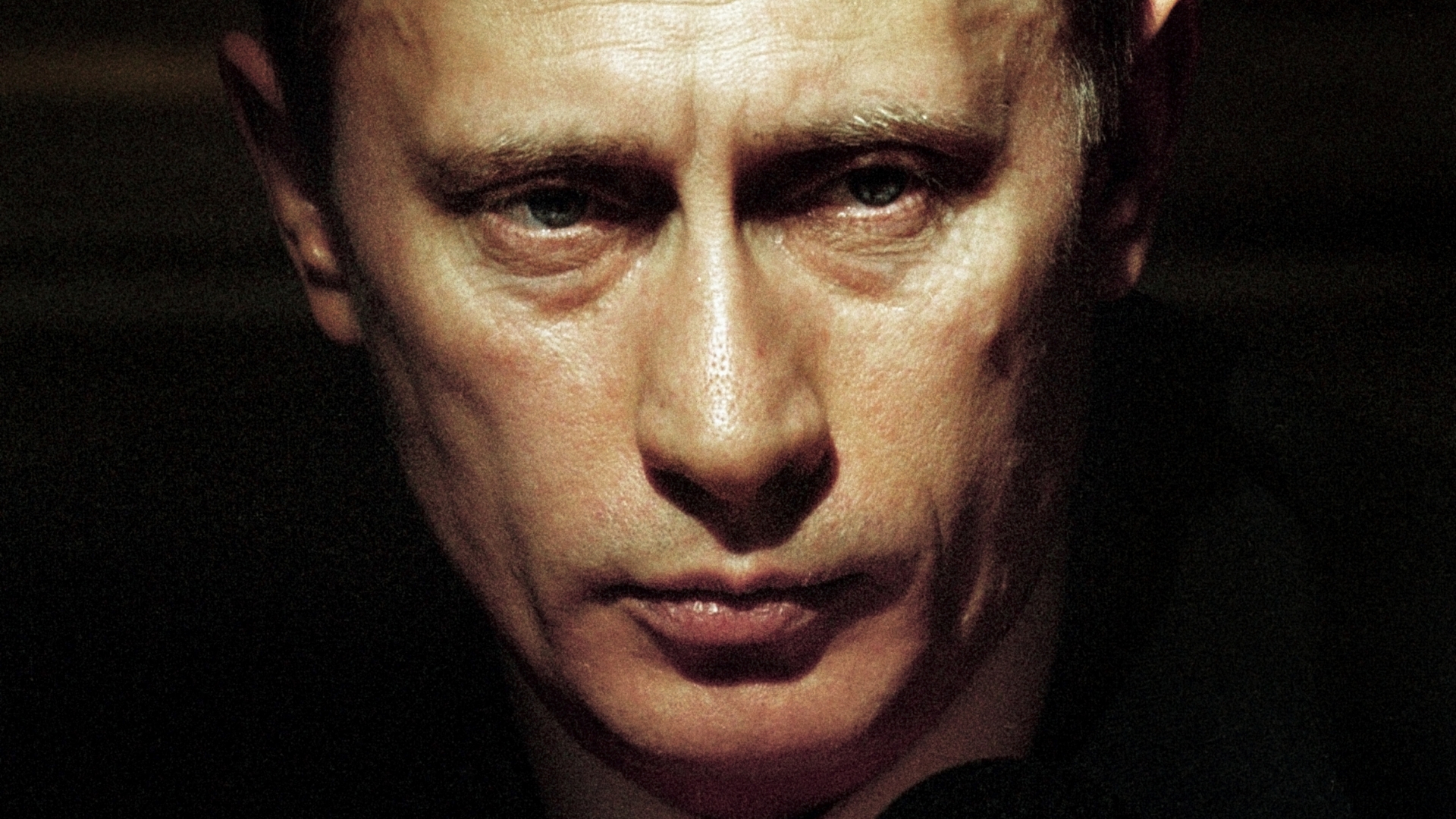
Putin's opponents have a habit of dying unexpectedly.


 So it seems that Alex Navalny was poisoned with Novichok.

Vladimir Putin will of course deny that it has anything to do with him, but then he would, wouldn't he?

Navalny is just the most recent of a series of opponents and critics of Putin who have met with trouble.

Here is a list:


2003  Sergei Yushenkov             - Opposition politician, shot

2004  Paul Klebinov                   - Journalist writing on corruption, shot

2006  Alex Livinenko                - Ex-spy, accused Putin of corruption and starting the Chechen war by fraud, poisoned

2006  Anna Politskaya                - Journalist, writing on Human Rights and corruption, shot

2009   Sergei Magnitsky             - Lawyer, uncovered fraud, died in (Russian) police custody 

2009   Natalia Estemirova           - Journalist writing on human rights, shot

2009   Stanislav Markelov         - Human Rights lawyer, shot

2009   Anastasia Babarelova       - Journalist, shot

2009   Boris Berezovsky            - Oligarch, put Putin in power, then became disaffected. Suicided in  his home in UK

2015   Boris Nemtsov                 - Opposition politician, shot

2018   Sergei Skripal                  - Double agent, poisoned by Novichok in UK, survived

2020 Alex Navalny                     - Opposition politician, poisoned by Novichok

So that is 12 prominent critics of Putin who have died or been poisoned in suspicious circumstances, two in the UK. There are many others, predominantly journalists, who have died.

This cannot be ignored. So what can we do?

The International Court of Justice has the ability to issue advisory opinions on contentious issues. 

This would be a reasonable place to start. Or possibly the International Criminal Court, which has authority to try cases where states use systematic murder.

The UK is best placed to initiate proceedings as two of the alleged crimes have occurred on British soil.

It would take a long time to set up and to deliberate, but the whole process would be at very least embarrassing for Putin. He would not attend himself, naturally, but could send his lawyers. The relatives and friends of his alleged victims could have their day in court. 

If the ICJ or ICC found against Putin, they could declare that he could be arrested if he left Russia.

And this is where it gets political. Putin could be offered a safe haven if he stepped down from power in Russia, but if he stayed he would be at risk of being arrested. 

This solution worked well in the case of Idi Amin, the dictator of Uganda, and it could work on Putin and many other dictators.

We should ask our MPs to consider this course of action.

Thursday, June 04, 2020

List of Johnson Government errors in managing the Covid-19 pandemic


Every death is a sad event to those who knew and loved the one who died. The sadness is compounded if relatives are unable to visit them when they are dying to say goodbye, and becomes even worse if they are unable to have a proper funeral, supported by all the people that loved, knew and respected the one who died. That is the individual, personal reality.

The statistical reality is that Boris Johnson has led our nation into the position of being, to use his own phrase, a word-beater in Covid deaths per million. Johnson is second only to the idiot Trump, although another would-be fascist, Bolsonaro of Brazil, is coming up fast to challenge Johnson for second place.

Boris Johnson's Government is responsible for this situation. The Conservatives have brought it about through a series of errors and mistakes of such magnitude that it makes you wonder whether they are doing it on purpose.

Here is a brief summary of some of Johnson's major errors:
  1. Austerity. Not strictly Johnson's fault, but an important factor, since it puts everyone in a situation of stress, which is a known depressant of the immune system. It could be argued that austerity stresses the body politic itself.
  2. Exercise Cygnus. Johnson failed to address the institutional weaknesses thrown up by the 2016  Exercise Cygnus, which was a kind of war-game scenario of an influenza pandemic. It suggested that there would be severe shortages of PPE. Instead of learning from this, and setting up plans to avoid shortages, the Conservative Government went to great lengths to suppress public knowledge of the findings of Cygnus.
  3. Herd Immunity This eugenicist notion was that instead of stopping disease transmission in the classical public health model, we should "take it on the chin" as Johnson put it, and let the infection run through the community until about 60% of the population had antibodies, at which stage the infection might  fizzle out. It was only when modellers showed that this theory would entail up to 500,000 deaths and would utterly overwhelm the ability of the NHS to cope that Johnson decided that even he, with his tame Tory media trotting along behind, could not get away with this. However, rather than switching to a full-on classical lock-down to combat the infection, Johnson dithered and went for a half-hearted version which aims to slow the spread rather than to try to suppress it entirely.
  4. Failure to learn from China, Italy and Spain. Johnson's mantra is "We are following the science". Science begins with observation.  They must (mustn't they?) have sent medics over to these countries to see what was happening, although I personally have not encountered any reports or recommendations from them.  Either their reports and recommendations were buried, or observers were not sent out in the first place. Whatever happened, it was a major fail.
  5. SAGE, the scientific Advisory Group on Epidemics was at first not transparent in its deliberations, and the minutes of some meetings are still not available. SAGE's method is to look at subjects one by one in an analytical and critical way, seeking for hard evidence, which is often not available for matters connected with pandemics, especially with an entirely new virus. They did not taks a systems approach to the pandemic. SAGE also made a serious mistake early on in assuming that Covid would behave just like an influenza epidemic. As a result of these weaknesses, an independent version of SAGE was brought together by Sir David King, a past chief scientific adviser.
  6. Late lock-down. Johnson was late to order everyone to stay at home. The nature of a doubling series (2,4,8,16,32,64, etc) is that it must be stopped at an early stage. It is easier to stop two cases becoming four, than to stop 64 cases turning into 128.  Greece locked down before is had any deaths, and its total deaths are in the region of 150. By contrast, UK official deaths from Covid are 37,000, and the real figure (based on excess deaths) is in the region of 55,000. Johnson faffed about for two or three weeks before announcing lock-down. That delay has been calculated to have resulted in the loss of 13,000 (thirteen thousand) lives.
  7. Big Public Events. In those weeks of delay, Johnson allowed three major events to take place : The Cheltenham Gold Cup races, a football match in Liverpool against Milan (which was in a bad way with Covid) and a  Wales v Scotland Six Nations rugby match in Cardiff. All three places were hit badly with coronavirus cases after the events.
  8. London was badly hit, and no attempts were made to prevent or relieve overcrowding on Underground trains, and masks on public transport were only ordered in mid-June, four months into the pandemic.
  9. Testing Fiasco. One of Health Secretary Matt Hancock's earliest pronouncements on Covid was that "Britain leads the world in coronavirus testing technology". After this empty boast, we were treated to weeks of agonised explanations of why we did not have an adequate coronavirus testing programme. There was an irrational failure to test front-line medical staff, and instead they were obliged to self isolate for 14 days if they were suspected of being infected.
  10. Laboratories. One of the causes of the testing failure was said to be the lack of laboratory facilities. There were many small laboratories that could have been brought into play, but their offers were ignored, and instead the Government gave contracts to large centralised laboratories.
  11. PPE. For weeks the news programmes were filled with stories of the lack of PPE for front-line staff. This was responsible for many infections and deaths in our front-line medical staff. It is very obvious that one of the reasons for the lack of PPE is that manufacturers were unable to keep up with global demand for disposable, single use kit, and that they should have gone for washable kit instead.

    Southampton University developed an excellent PPE that supplied filtered air to the wearer, with added advantage that the face of the doctor or nurse was visible. Sadly, this has not been brought into general use.
  12. General Practice. General practice has been sidelined. Its special knowledge and influence in its practice area has not been brought into play. Information sharing between testing agencies and GPs has not been good.
  13. Privatisation. Instead of using existing institutions, Johnson's Government has tended to go for newly created private companies whose competence has not been tested. As a result, many outcomes have not been good.
  14. Local Authorities. Similarly, local Directors of Public Health and Environmental Health Officers have not been used for contact tracing. The decision not to do contact tracing was made because there were too many cases in London for contact tracing to be feasible, but in many other areas the low number of cases meant that EHOs could have kept their area Covid-free. Generally, the Government seemed more interested in passing contracts to newly set up private companies than using established institutions. Contact tracing when it was set up was late and chaotic, with web application forms not working, and a four month delay announced before the scheme would be fully operational.
  15. Digital contact tracing was attempted using new technology created by an ethically dubious entrepreneur instead of going in with a stable system shared with other countries.
  16. Masks reduce the range of infected droplets emitted when anyone carrying the virus speaks or coughs. They are particularly effective in situations such as public transport or at work where social distancing is not possible. Government and its media have obfuscated this simple point and have not given a clear lead to get the majority of people wearing them.
  17. Irrational rules. People are allowed to have cleaners come in to their homes, but not allowed to have family members to the same. B&Q were allowed to stay open, but not garden centres.
  18. Nursing Homes. Hospitals were allowed to discharge Covid-positive patients to Nursing Homes. Nursing and care homes were last in line to receive PPE, and clearly were low on the list of Government's priorities.
  19. Procurement. There was a failure in the procurement procedures for oxygen and pharmaceuticals. Johnson refused to go in with Europe's effective procurement procedures.
  20. Airline passengers. Incoming airline passengers were not checked for fever until late in the pandemic. Britain was almost unique in this regard. It is especially odd that while Johnson as a Brexiter is at pains to keep foreigners out of the country, infected foreigners are not to be excluded.
  21. Early release of lock-down. Johnson is desperate to get people back to work before the pandemic was receding. As a result of the Tories' impatience with the scientific realities of infection, the economic outlook is that Britain will still be flopping around with recurrent outbreaks and intermittent lock-downs when China, South Korea and Europe have brought their infections down to trivial levels and are in full economic mode again. Greece has already opened its borders to countries that have had success in containing the virus, but has insisted that Britons must be quarantined. Other countries will be doing the same over the coming months.

    One of the errors of Johnson's exit from lock-down is that he is setting dates for further liberalisations. Instead of dates, we should be liberalising on the basis of targets in the Reinfection Rate.
  22. Dominic Cummings broke the lock-down rules by driving his wife to Durham while she was suffering from Covid. Johnson failed to sack him. He claimed that he did this for child care reasons, but the clause that he was using was designed for exceptional cases such as child abuse. The social psychologists in SAGE could have predicted the result, that a large part of the population will now follow Cummings' example and take a relaxed view of lock-down rules.
This is an egregious series of errors. It strains credibility to believe that they have all happened by accident. In view of the early interest in allowing the disease to rip unhindered through the population in pursuit of Disease-caused Herd Immunity (as opposed to herd immunity produced by vaccination), it is possible that many of these errors were intended to allow the disease to progress. As a result of Johnson's choices, tens of thousands have suffered an unpleasant and unnecessary death.

Johnson does not deserve to remain Prime Minister.

Further reading: Here is an excellent piece from the Financial Times which gives more detail and background thinking on most of the points in my post.


Tuesday, June 28, 2016

The case for a second referendum


The EU referendum on 23rd June has thrown the UK into a state of political chaos. We are a rudderless ship on stormy waters drifting towards a sandbank. We have 3 or 4 months under a lame duck Prime Minister, followed by, God help us, the possibility of PM Boris Johnson.
Meanwhile Labour is having a spasm.
Hate crimes are happening.
World leaders and politicians are aghast apart from Vladimir Putin, Marine Le Pen, Donald Trump, Gert Wilders and other European neo-fascists.
The markets are reeling, sterling has fallen, Standard & Poor have stripped us of AAA rating and trading was stopped on RBS and Barclays yesterday.

If some idiot goes ahead and invokes Article 50 that sets in train our withdrawal form the EU, we open up the following problems:
  1. Scotland
  2. Ireland
  3. Gibraltar
  4. Calais
  5. Trade with the EU
  6. Issue new Passports to everyone who needs one
  7. The situation for Brits abroad
  8. The position of EU citizens in Britain
  9. A huge raft of legislation changes
  10. Unwelcome changes in the EU itself, including the possibility of a general economic and political collapse.
  11. Other things we are not expecting

Of course, it may all be all right. Boris, Gove and Nigel may come up with a plan and exert inspiring leadership, the other EU countries may behave like perfect gentlemen and ladies, it won't matter that our imports are more expensive and our exports will be subject to protracted negotiations, and all this will have no effect on our balance of trade, and we may develop a new export line in flying pigs.

On the other hand, it may not be all right. It is likely that Boris, Govey and Nigel were wrong, the nine authoritative economic bodies were right, and that Brexit is going to hurt our economy to the point of bringing on another, self-inflicted, recession. 

In view of the seriousness of the consequences of leaving the EU, it would be wise to consider whether we should have a second referendum.

This is the case for the second referendum:

  1. The referendum is not legally binding, only advisory. Nobody is obliged to act on bad advice based on emotion and false information.
  2. It is not correct to say that the democratic will of the people is to Leave. It is very clearly the case that the nation is in two minds over the EU. It is true that Leave was first past the post, and has a 4% majority consisting of 1.3 million votes. which was slightly more than the Green Party's vote of 1.2 million in the 2015 general election. The Green vote produced 1 MP. Is it really right and proper that a similar number of people should be able to plunge our country into chaos?

    Legislation demands that a minimum of 40% of the eligible electorate must vote for a public sector strike for it to be legal. The Leave vote amounted to 37% of the eligible electorate.
    The problem here is that the European Referendum Act 2015 was designed with a simple majority, where 50%+1 vote can win. This is clearly an absurd rule. It is usual  in the case of constitutional change that a supermajority, where a clear and significant majority is required (60/40, 66/33 for example), is used. We need to know who opted for a simple majority and why.

    UKIP cannot complain about the second referendum because Farage said in May that a 48/52 result would be "unfinished business".
  3. The newspaper coverage was not balanced. One study showed that for every single newspaper article advocating Remain, there were no less than four advocating Leave. This is a distortion of the democratic process.
  4. There are many reports of people regretting their Leave vote, once they realised what it meant. The Mail and the Sun have both explained what Leave meant (after the vote), and their reader comments make interesting reading. Even Kelvin MackKenzie, the abrasive Sun columnist, regrets his vote.
    More than 1.1 million are estimated to wish to change their vote.
  5. Many voters feel that they were misinformed by the newspapers before they voted.
  6. A common complaint of those who regretted their Leave vote was that they were misinformed.
    There were three main lies told by the leave campaign:
    5.1 The £350 million per week for the NHS promise which was denied within hours of the result.
    5.2 The promise that Brexit would cut immigration was denied by Dan Hannan MEP, a prominent Leave campaigner, again within hours of the result.
    5.3 Imminent Turkish accession to the EU was claimed by Leave

    In addition to these three, David Cameron claimed 6 lies by Leave:
    5.4 That the UK is liable for future eurozone bailouts. Cameron says his EU renegotiation means Britain is categorically not liable.
    5.5 That Britain’s EU rebate is at risk. Cameron says the British prime minister has a veto on changes to the rebate.
    5.6 That Britain has given up its ability to veto EU treaties. The prime minister says there is nothing in the EU renegotiation that relinquishes the UK’s veto.
    5.7 That Britain cannot stop overall EU spending from going up. Cameron says the EU budget is set in stone until 2020 and can only be changed with the consent of all countries.
    5.8 That the UK is powerless to stop itself becoming part of an EU army. He says Britain has a “rock solid veto” on EU foreign and defence policy.
    5.9 That leaving the EU would save Britain £8bn. He says this claim was debunked on Monday by the Institute for Fiscal Studies, which said a Brexit would mean spending less on pubic services, or taxing more, or borrowing more.

    There are likely to be other lies that could be identified, but these 9 will be enough to make a case that the voters were misled.
  7. There is a precedent for a second referendum: Ireland held a referendum in 2008 on the EU Lisbon Treaty. It was rejected 53/47 (turnout 53%). The Irish Government asked for the reason for the rejection. A common reason given was inadequate information. Negotiations followed, and a second referendum accepted Lisbon 67/33 (turnout 59%)

    In fact the present referendum can itself be seen as a second referendum, since we were asked whether we should leave the EC in 1975. 67% decided to remain.
In conclusion, there is a good case to be made for a second referendum. It could be scheduled as soon as the practical ballot arrangements can be made. Changes should be made, so that a supermajority should be set that must be passed before we leave. All claims made by campaigners should be examined and verified. Newspapers must simply make equal amounts of space available to the campaigns, and broadcasters likewise must allow equal time for campaigns to make their pitches. 

A second referendum is possible. In the meantime if you haven't signed the petition calling for a second referendum, now is the time to do it. It is an imperfect petition, and although it has been hacked, the spurious signatures have been removed, and it remains a useful focus for bringing pressure for a second referendum. Also write to your MP asking for this.

The show ain't over until some fat idiot presses the Article 50 button.